Redesigning how businesses act on their performance with AI coaching
The only window into their business
Unlike hotel chains, independent hoteliers have little to no account support to fall back on. Expedia's performance tools are their only window into how their business is performing, how they compare with competitors, and where to focus next.
180,000+
hoteliers rely on Expedia performance tools
65%
of Expedia's partners are independent hoteliers
$19M
is what these performance tools bring to Expedia
The problem
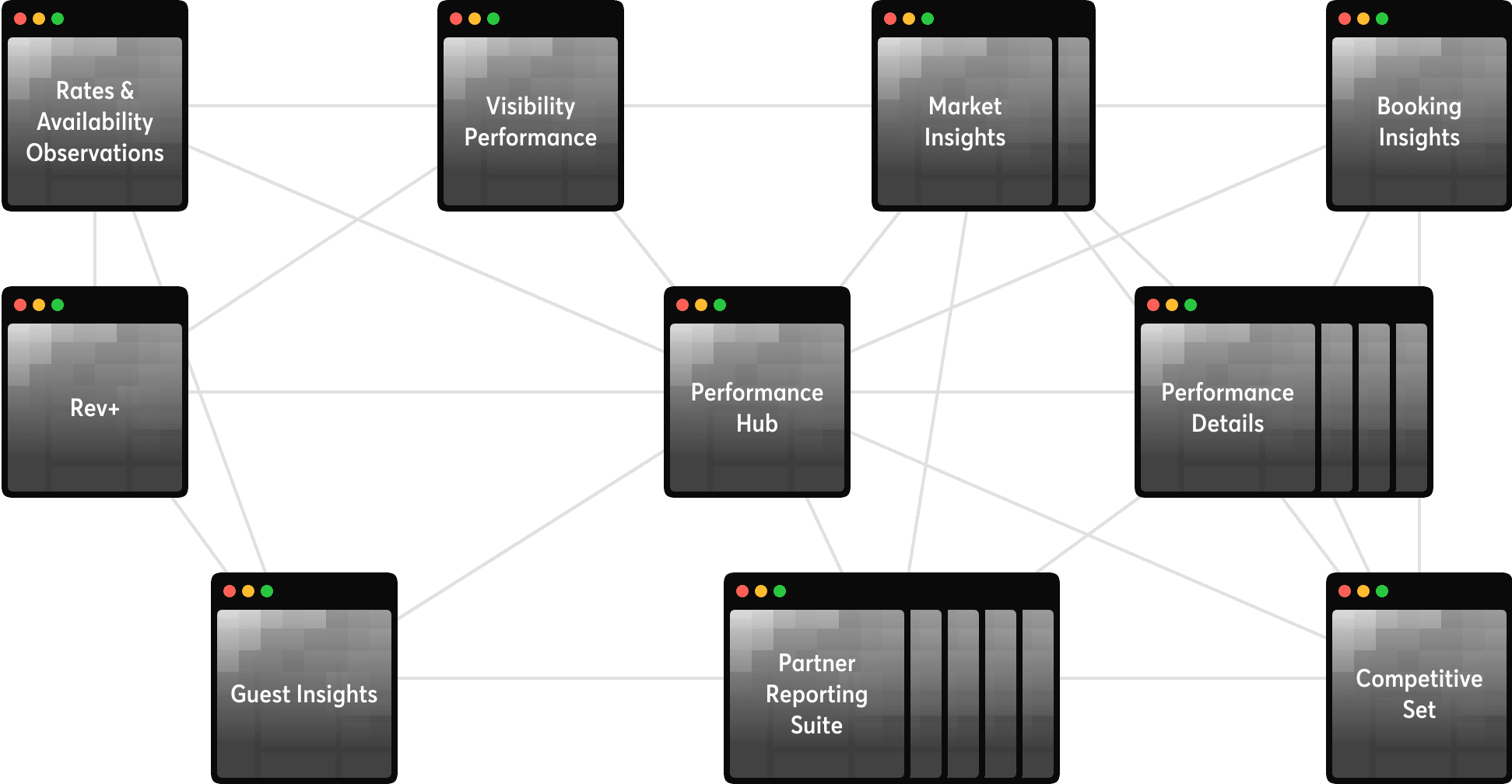
Fragmented views
Inconsistent data
No path to action
Each session was a scavenger hunt across disconnected tools. Hoteliers had to navigate multiple pages and reports to piece together a complete view of their performance. {Most gave up before they got there, and made decisions based on whatever they happened to find first.}
Its root cause
These weren't just design oversights. They were symptoms of years of siloed work: teams owning different parts of the experience and shaping each one around their immediate goals. The cracks showed up in two places: in the competing visions leadership had for the product, and in the way engineering ownership was split across the organization.
Competing organizational priorities
Two senior leaders from different organizations, reporting to different people, had incompatible visions. One prioritized commercial objectives, while the other prioritized platform capabilities that other teams would rely on. Both approaches had their merits, but the tension had made progress impossible.
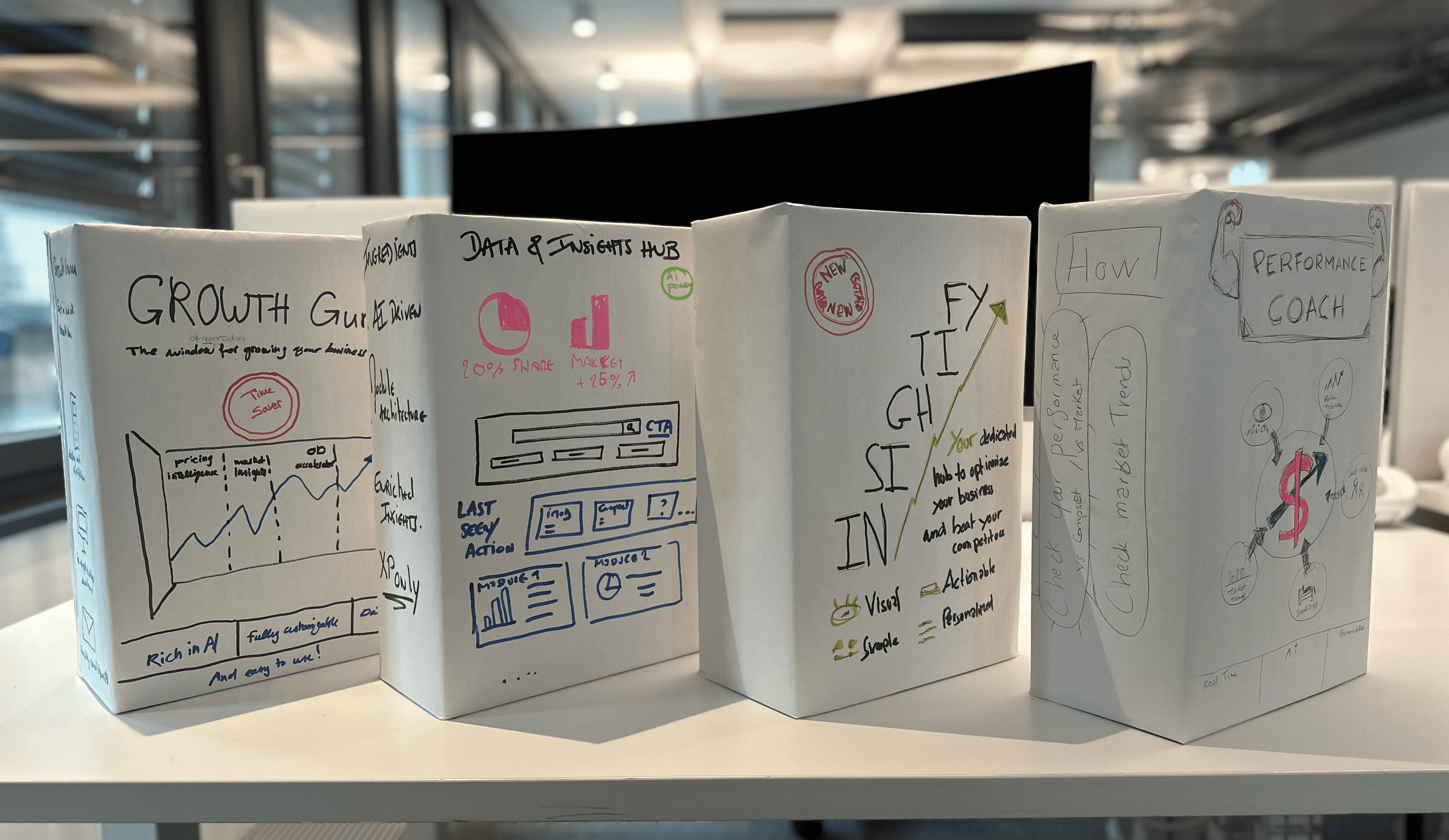
I set up and facilitated a cereal-box workshop, an exercise in which stakeholders shape the product's "packaging" together. It forced a single coherent promise to the user instead of two competing internal ones. Working on the same artifact shifted the conversation from what each team wanted to what hoteliers actually needed.
Fragmented engineering ownership
The data powering Expedia's performance tools and the metrics displayed in them were owned by different teams, each with its own timelines and priorities. With the support of my engineering team, I surfaced these ownership gaps directly to VP-level leadership, and we negotiated a phased approach: launching with a verified set of metrics and expanding coverage as ownership of each one was consolidated under a single team.
The solution
One place for everything
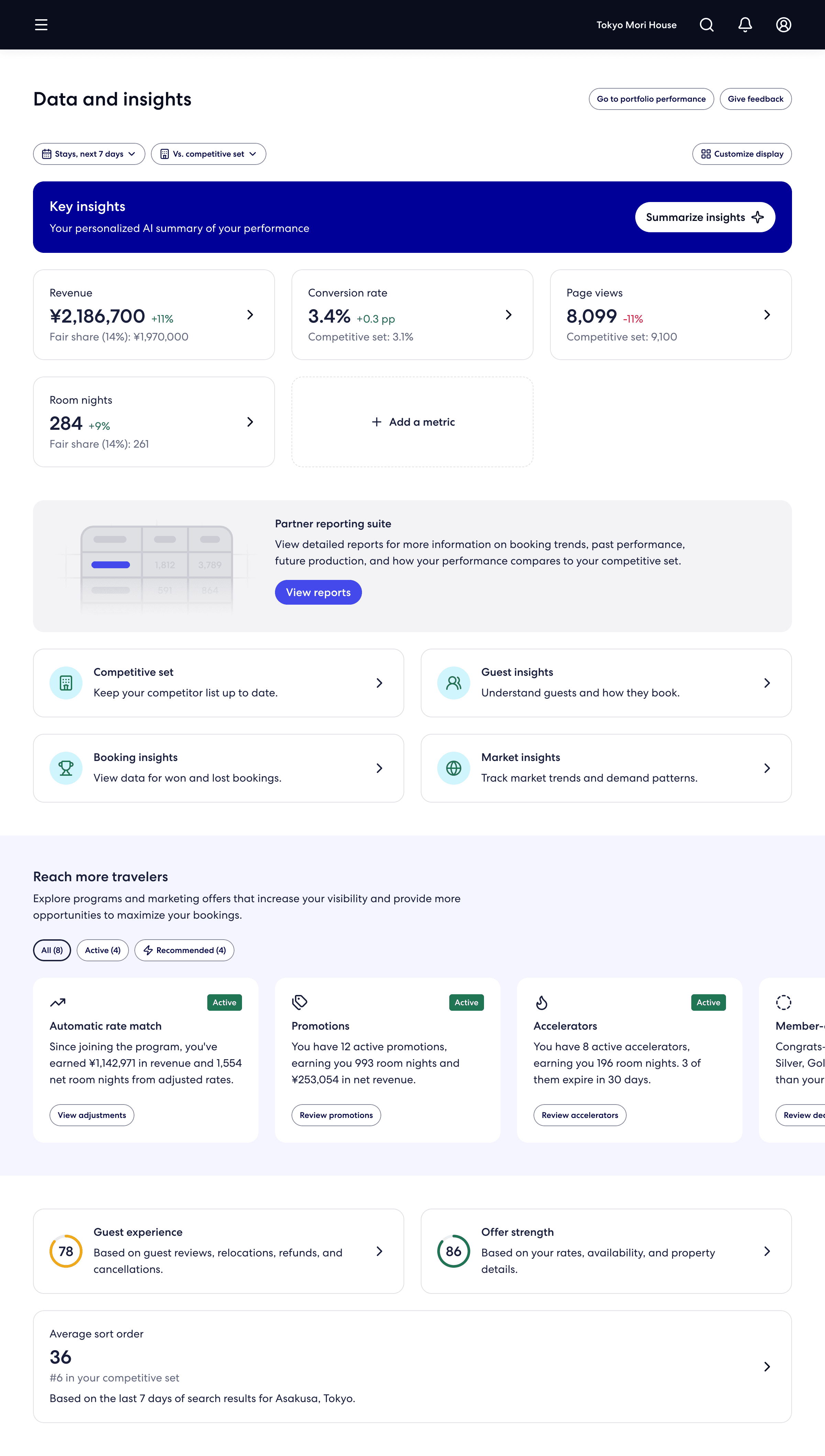
I designed a single dashboard that brought all performance data together for the first time. A few specialized tools were too complex and not ready for consolidation, so I merged what I could and made the dashboard the main entry point to the rest.
"It’s now much easier to see all the data I need."
— Noelia, Revenue Manager
Built for every independent hotelier
A fixed layout would have forced a compromise: too bare for hoteliers who needed granular visibility, too dense for those who just wanted the basics. Instead, hoteliers controlled which metrics they saw and how they organized them. The same interface could serve a first-time property manager and a seasoned revenue manager without asking either to compromise.

Data hoteliers could trust
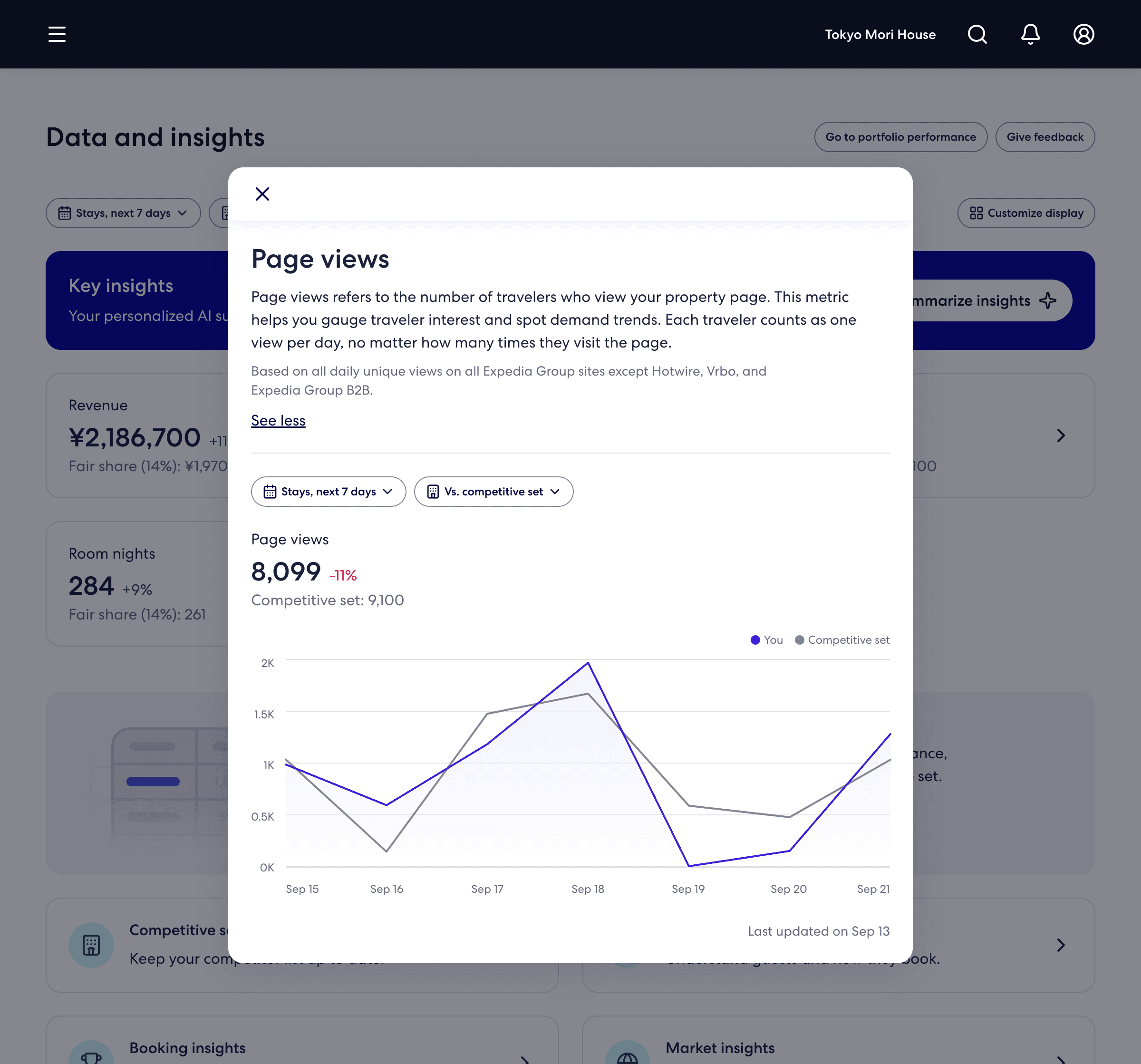
With ownership consolidated, I partnered with our content designer to build a metric glossary defining exactly what each metric measures and how it's calculated. Those definitions were surfaced directly in the interface, so hoteliers could click on any metric to understand what they were looking at.
"This is great. I have been waiting for this for a long time. Now we can speak the same language between Expedia and our hotel partners."
— Greg, Market Manager
An AI coaching layer built on trust
Setting the quality bar
Turning latency into trust
Closing the loop
Reliable data was the foundation, but the guidance had to earn users’ trust as well. I designed a feature that generated personalized insights. Unlike a conventional deterministic interface, an AI-powered one isn't fully controllable, and that changed what design meant here.
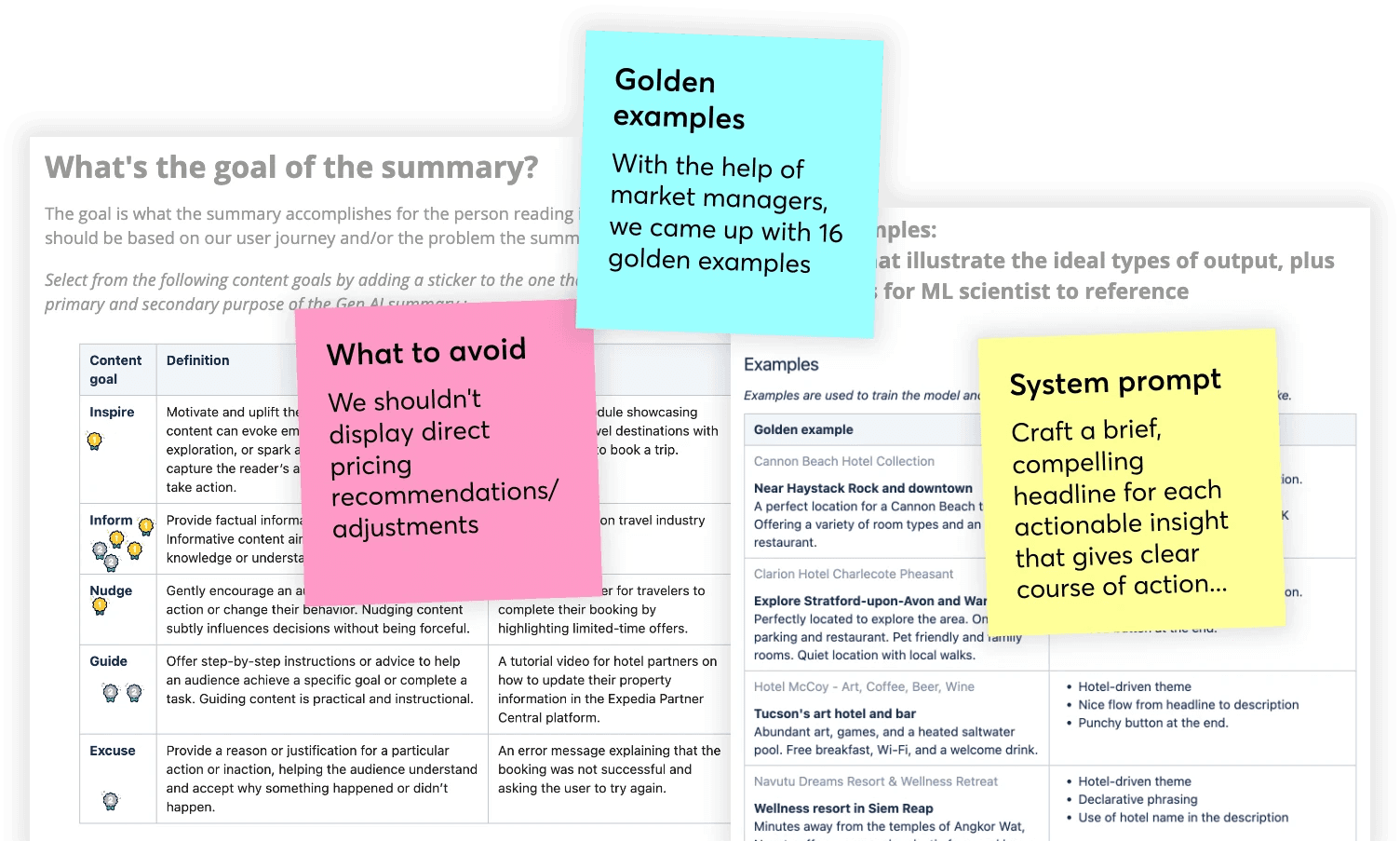
Market managers had been a blind spot in our research, but if the AI's guidance held up for them, they would vouch for it to the hoteliers they coach, turning trust into adoption. That's why I co-led two workshops with our content designer and user researcher, one with market managers and one with ML engineers, to produce a set of "golden examples." These became the evaluation benchmark and the quality bar that made the output trustworthy enough to ship.
Next steps for AI coaching
The 50/50 feedback on the AI coaching feature wasn't about how it looked. It was about the usefulness and quality of what it recommended. The AI didn't actually understand the tools it was suggesting, so the guidance often missed the mark.
I began designing a version where the AI was given that understanding directly: what each tool did, what problem it solved, and when it was the right call over another option. Accelerators, for example, had always existed as a lever hoteliers could pull, but the AI could now reason about when running one actually made sense for a specific hotelier's situation, and make a more convincing case for it.
I hadn't tested this direction with users before I left the company, so it remains a proposal rather than a validated improvement.

From MVP to global release
Our initial team included a senior product manager, a lead engineer, a researcher, a content designer, and me. We shipped an MVP in a single quarter. Launching in English only let us skip localization entirely and iterate on content until we were confident in it.
Rather than releasing broadly, we started with a test group where users could roll back to the previous experience at any time. That opt-out was a more honest signal than any survey. Our threshold for global release was 85% of users choosing to stay.
Getting there took three rounds of qualitative research across the full timeline, each shaping what we built next. As research signals improved and rollback requests declined, we expanded access to more users and locations. Reaching global release required more features, which required more hands. The team grew: our PM changed, thirteen engineers joined, and two designers joined, reporting to me. My role shifted from hands-on craft to setting design direction, sequencing what we built, and keeping the experience coherent as the team and scope grew.
The outcome
For the first time, hoteliers had a single place to look, data they could trust, and guidance grounded in their own numbers. Recommendation completion rate was the metric senior leaders tied directly to gross profit. When we started, it sat at 2%, not just a low number but a measure of how completely hoteliers had learned to tune the platform out. It tripled to 6% and led to a $1.5M increase in gross profit.
3X
recommendation completion rate (2% → 6%)
88.4%
of hoteliers decided to stay in the new version
83.1 SUS score
Top 10% of software products